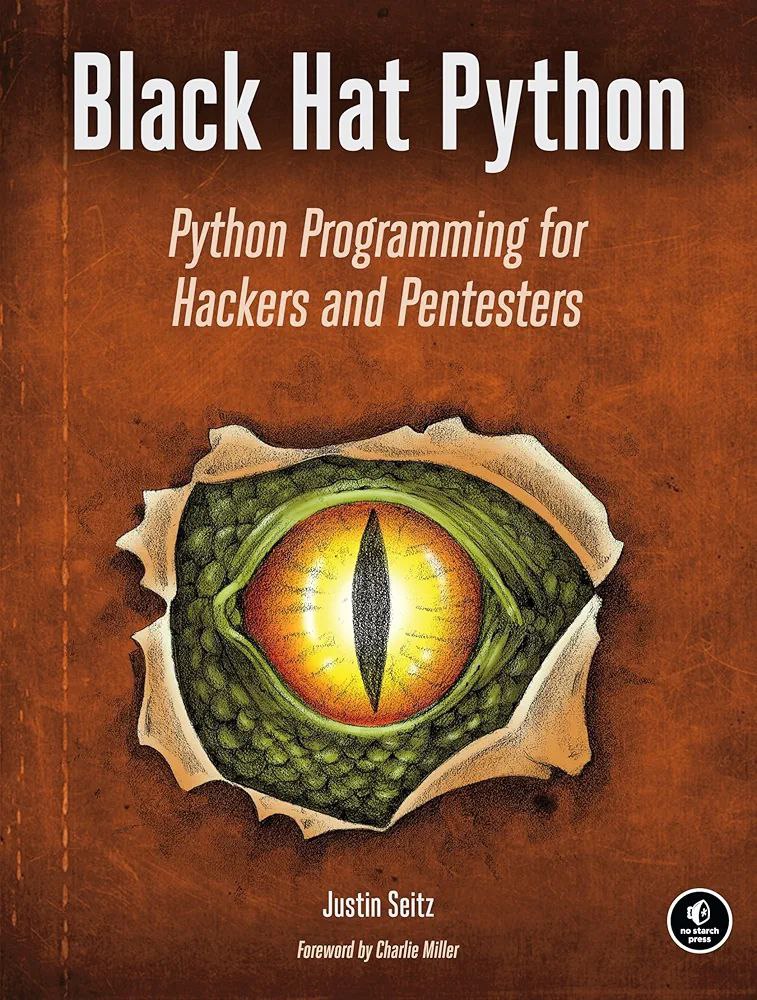
Introduction to Python for Cybersecurity : - The book explains how to use Python to build tools for penetration testing, starting from the basics to developing advanced tools. Python is favored in this field due to its flexibility and the abundance of libraries that support various scanning and attack techniques. Network Control and Scanning Tools : - It covers how to create custom tools for network scanning and communication using libraries like socket and scapy. This includes programming network scans, port scans, and identifying devices connected to the network. Programming Trojans: - The book explains how to build malicious applications using Python, and how to make them run in the background without the user noticing. These applications can steal data or open backdoors for remote control of the compromised device. Social Engineering Tools: - It discusses how to use Python to automate social engineering attacks, such as phishing for passwords by programming fake login pages. The tools include techniques for impersonation and manipulating users to gather sensitive information. Network Sniffing and Analysis : - The book covers methods for network sniffing and how to capture and analyze data traveling over networks. Python is used to create custom tools for monitoring traffic and analyzing network packets. Bypassing Security Measures : - It explains how to develop tools to bypass security systems like firewalls and intrusion detection systems. This involves manipulating network protocols and creating advanced attacks to evade these protections. Building Exploits: - The book discusses how to build tools to exploit security vulnerabilities in applications and operating systems, such as buffer overflow vulnerabilities and remote code execution attacks.
Author Name : Justin Seitz
Book Language : English
Book Price on the platform : 33$
Book Price on our website : free
Order It Now
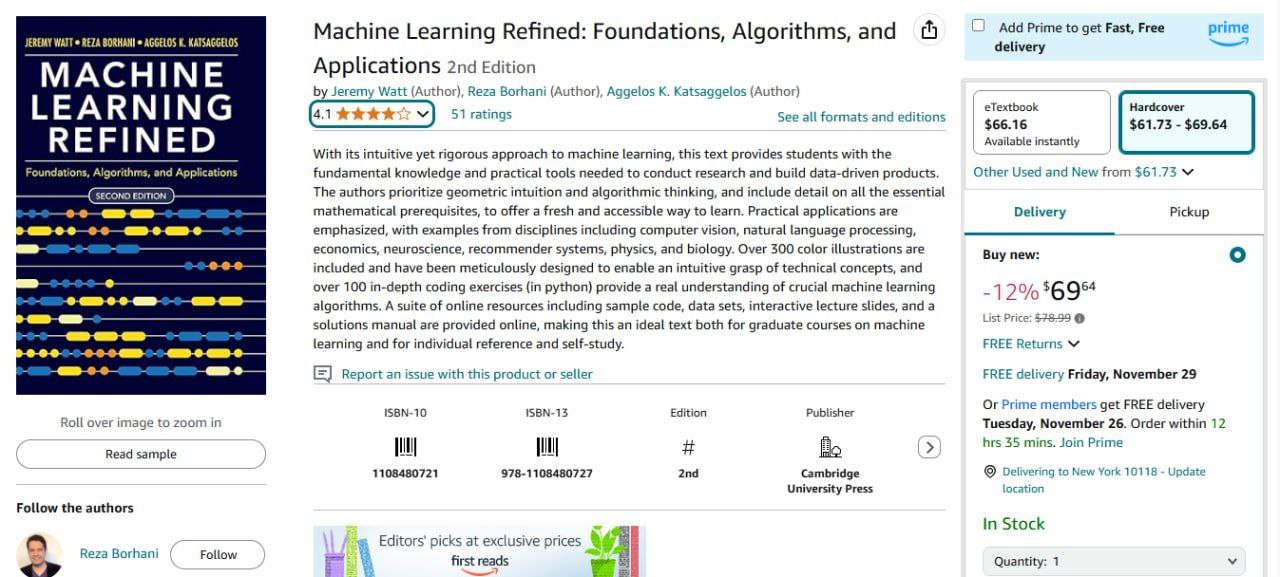
With its intuitive yet rigorous approach to machine learning, this text provides students with the fundamental knowledge and practical tools needed to conduct research and build data-driven products. The authors prioritize geometric intuition and algorithmic thinking, and include detail on all the essential mathematical prerequisites, to offer a fresh and accessible way to learn. Practical applications are emphasized, with examples from disciplines including computer vision, natural language processing, economics, neuroscience, recommender systems, physics, and biology. Over 300 color illustrations are included and have been meticulously designed to enable an intuitive grasp of technical concepts, and over 100 in-depth coding exercises (in python) provide a real understanding of crucial machine learning algorithms. A suite of online resources including sample code, data sets, interactive lecture slides, and a solutions manual are provided online, making this an ideal text both for graduate courses on machine learning and for individual reference and self-study.
Author Name : Jeremy Watt
Book Language : English

Book Price on the platform : 69$
Book Price on our website : free
Order It Now
I hope that you will benefit from the courses that we have provided, and we will always work to provide the best.
Made With 🤍 By Mohammad Iskandar